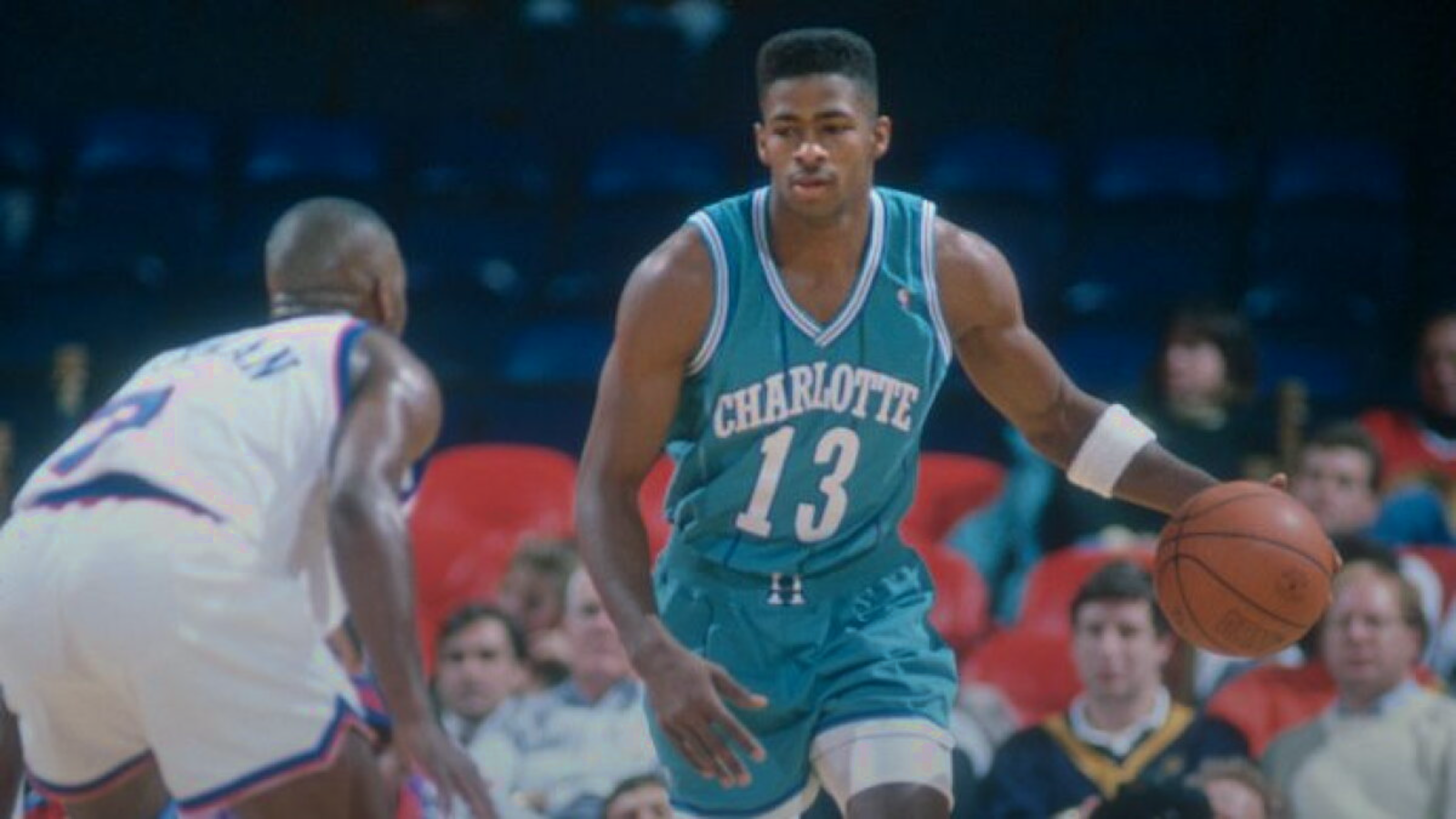
Long before streetwear brands dominated high fashion, a young NBA expansion franchise in North Carolina casually altered the landscape of global sports aesthetics. In the early 1990s, the Charlotte Hornets weren't just playing basketball; they were defining what it meant to be cool. With vibrant color schemes, iconic Starter jackets and a roster packed with swagger, Charlotte emerged as an undisputed juggernaut of 90s pop culture.
In a recent appearance on Pull Up With Scoop B, former Hornets guard Kendall Gill took a nostalgic lap around the franchise's golden era, reflecting on how Charlotte became an empire—and why walking away from it remains his single biggest career regret.
The Birth of an Iconic Aesthetic
When the Hornets debuted as an expansion team in 1988, traditional NBA aesthetics were dominated by classic color palettes like navy, red, gold and green. Charlotte blew past those conventions by enlisting North Carolina fashion designer Alexander Julian to craft their visual identity.
Julian introduced a striking combination: electric teal and deep purple, accented by crisp pinstripes. At the time, pinstripes had never been used on an NBA uniform. The result was an instant design masterclass that transcended sports apparel.
Within years, Charlotte Hornets gear was everywhere. Kids across North America were rocking teal Starter jackets on school grounds and custom Hornets snapbacks became a staple of hip-hop culture.
"Everybody loved our colors... they were beautiful colors, and that’s why everyone wore our Starter jackets and most kids had the Charlotte Hornets jerseys," Gill explained. "I still have down there in my man cave my Charlotte Hornets jerseys, framed up on the wall—the teal, the purple, and the white."
Rise of the 'Hive: Young Contenders with Massive Personality
A world-class uniform only carries weight if the product on the floor delivers energy and the early 90s Hornets had dynamic energy in abundance.
Drafting Kendall Gill fifth overall in 1990 set the stage. The franchise then added powerhouse forward Larry Johnson in 1991—who immediately captured the nation's imagination alongside his famous Converse "Grandmama" commercial campaign—and defensive phenom Alonzo Mourning in 1992. Rounded out by 5-foot-3 point guard Muggsy Bogues and lethal shooter Dell Curry, Charlotte boasted one of the most charismatic, fan-favorite lineups in sports history.
That core fast-tracked Charlotte into a force on the floor. In 1993, the squad won its first playoff series with a dramatic opening-round upset of the Boston Celtics—capped by Mourning’s iconic series-winning jumper—before pushing the physical New York Knicks in a five-game second-round battle.
"Even though it was a small-market team, it was one of the most popular teams in the league aside from MJ in Chicago, Shaq in Orlando, and then L.A.," Gill said. "And then us."
A Miscalculated Exit and a Lasting Legacy
Despite building something truly special both on and off the court, the young squad fractured before reaching its full potential. Following his third year, Gill opted to test free agency—a decision he views through a very different lens decades later.
"I got two regrets in my career: One was leaving the Charlotte Hornets as a free agent after my third year... We were young, but me not understanding what we had, I decided to test free agency," Gill admitted. "If I had to do it all over again, I would’ve signed and stayed with the Charlotte Hornets because that’s where I should’ve been... NO WAY would I have ever left Charlotte."
Gill's departure foreshadowed the end of an era, as trades later dismantled the Mourning and Johnson core. Yet, the legacy of those early 90s Hornets remains untouchable. They proved that a small-market expansion franchise could capture the global sports market through sheer style, bold design and raw personality—setting a visual standard that still influences sports fashion today.