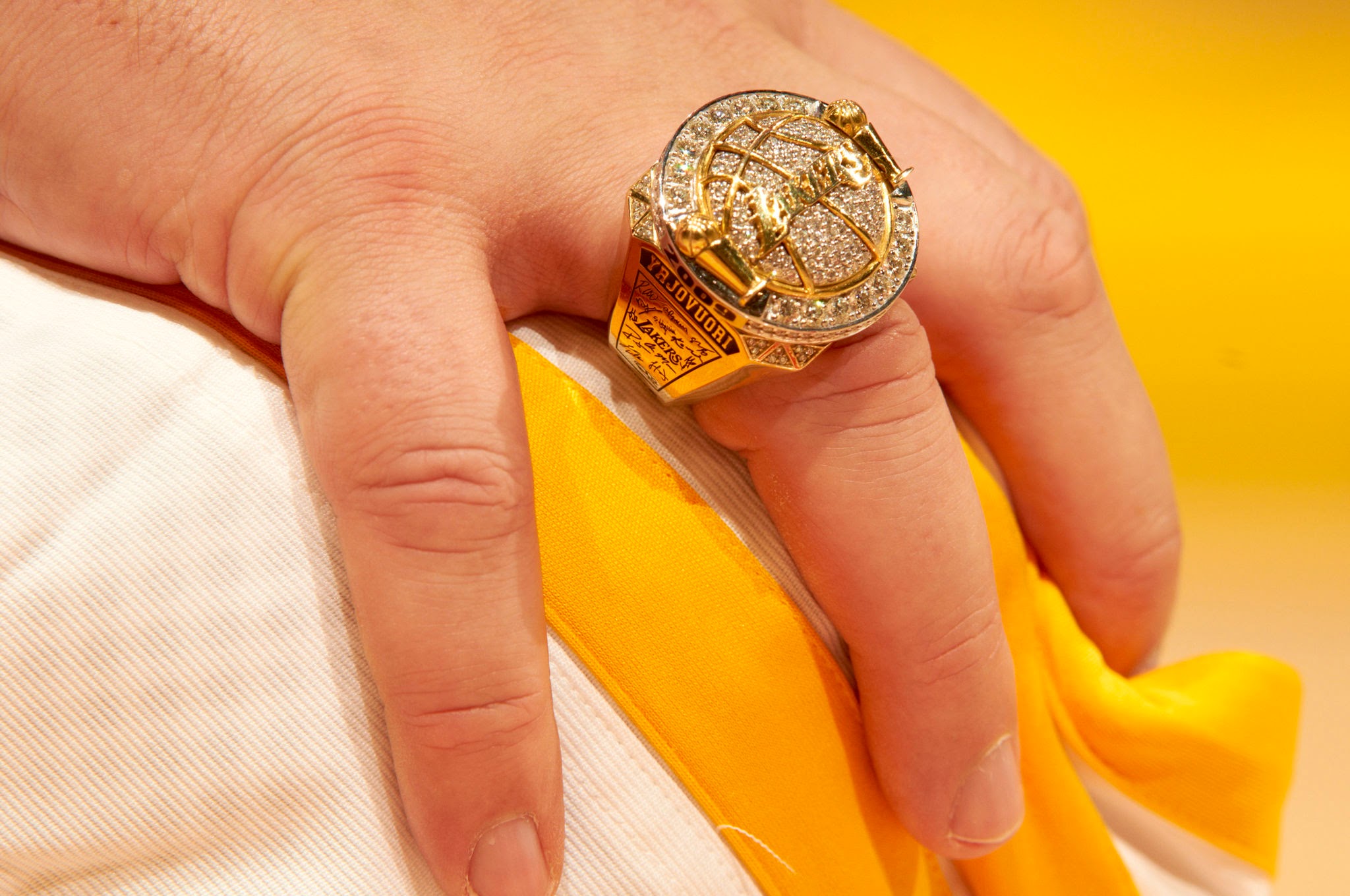
As an eight-year-old growing up with dreams of becoming the next Magic Johnson, Jason Arasheben quickly realized his athletic limitations would keep him off the court. However, that lack of speed and vertical jump did not stop the founder of Jason of Beverly Hills from leaving an indelible mark on NBA history.
Speaking on Episode 4 of The Pull Up With Scoop B, Arasheben broke down how he pivoted his passion for basketball into building a luxury jewelry empire—and how a long-shot pitch to the Los Angeles Lakers secured his defining career breakthrough.
The Lakers Breakout: “I Had No Business Doing the Ring”
By 2009, Arasheben had spent seven years cultivating a loyal clientele among NBA stars, including Lakers roster members Trevor Ariza and Andrew Bynum. His entry point into the franchise's inner circle came through a close personal friendship with Jessie Buss, son of late Lakers owner Dr. Jerry Buss.
Arasheben attended every home game and traveled to every road city during the team's 2009 playoff run. When the Lakers captured the title, he took a leap of faith despite lacking traditional manufacturing infrastructure.
“I said to Jessie, ‘Jessie, I would love to be considered to do the championship ring even though I had no shot of ever being able to do it…’” Arasheben recalled. “He goes, ‘Well I’ll go talk to my dad and let me see what I can do.’”
A week later, Arasheben found himself in a high-stakes pitch meeting with Jeanie Buss and then-Head of Business Operations Tim Harris.
“I gave them my pitch and I guess apparently I did a good enough job and I ended up getting the contract,” Arasheben shared. “For me, that was the defining moment in my career because you know, to get that kind of achievement, that’s like the pinnacle of where sports and jewelry meet.”
The Evolution of NBA Style: 2003 Draft to Modern Craftsmanship
Arasheben first established his name during the historic 2003 NBA Draft class—a legendary rookie pool headlined by LeBron James, Carmelo Anthony, Chris Bosh and Dwyane Wade. Reflecting on more than two decades in the industry, he noted that while core trends shift, the underlying appeal of sports jewelry remains constant.
“If you look at the aesthetic from the style that was popular then to the style that is popular now, it’s really not that different,” Arasheben explained. “Of course the length of the chains have changed—guys used to wear them all the way down, now they wear them as chokers and now it’s reverting back to the long chains... but the style has very minimal changing.”
The true evolution, according to Arasheben, lies in technical execution and storytelling. Modern technology and manufacturing have forced designers to elevate their craftsmanship.
“The competition has brought the best out of people, but you’re seeing better design pieces and better workmanship on the pieces than you saw 15-20 years ago,” he said. “As far as the aesthetic, it’s very similar in that everything is custom to that player. It tells a story about that player, their journey, their aesthetic and their personality.”