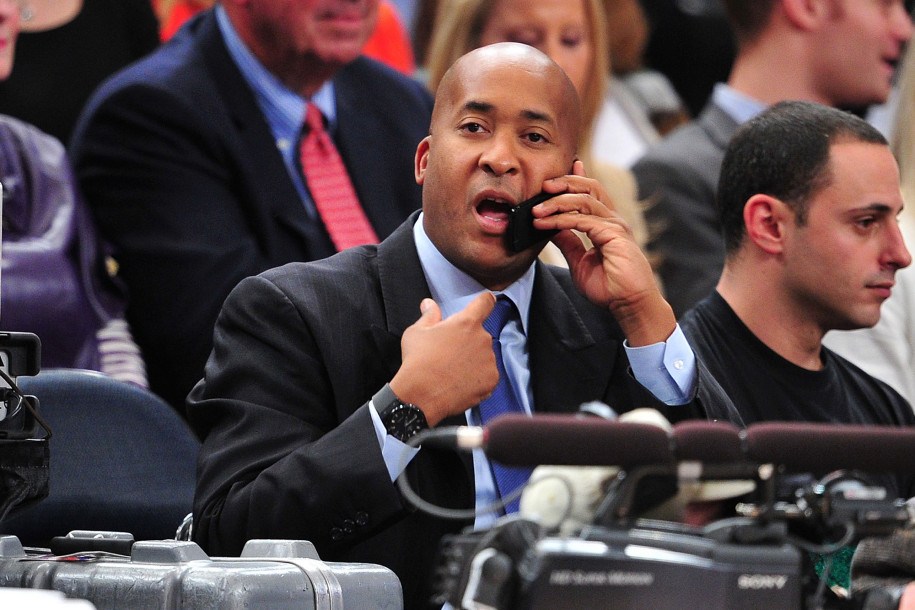
In basketball culture, power often operates in the open—measured by championship rings, maximum contracts, and social media followers. But for decades, the most influential figure in the sport didn't play, coach, or officially manage a team. He was William Wesley, universally known as “World Wide Wes.”
During a recent appearance on The Pull Up with Scoop B, veteran sports journalist Robert “Scoop” Jackson sat down with host Brandon “Scoop B” Robinson to reflect on Wesley’s unmatched legacy, his transition into front-office legitimacy, and why his unique brand of influence can never be replicated in the modern era.
The Power of Absolute Anonymity
When asked if basketball culture would ever produce another figure like Wesley, Jackson’s answer was immediate: someone might replicate the connections, but no one will ever match the discretion.
“Today, people are too thirsty for clout,” Jackson noted. “Wes moved in the shadows for decades out of calculated precision.”
For years, Wesley existed as an enigmatic, connective thread running through the highest levels of the NBA, NCAA, hip-hop, and politics. He was a power broker who built an empire of influence entirely on trust and proximity, all while avoiding the press and keeping his name out of print.
The Column That Blew the Cover
That calculated anonymity changed dramatically in 2005. Upon making his high-profile transition from SLAM magazine to ESPN, Jackson was tasked with writing an introductory piece titled “Scoop’s Manifesto” to outline his perspective on the sports landscape.
Inside the column, Jackson included a single sentence that sent shockwaves through the industry: “I believe the second most powerful person in sports behind Phil Knight is William Wesley.”
“To SLAM readers, that was common knowledge,” Jackson recalled. “But to mainstream ESPN readers, executive offices, and The New York Times, it created a firestorm. People were asking, ‘Who the hell is William Wesley, and how is he more powerful than league commissioners?’”
The national exposure caught the shadow broker himself off guard. Shortly after the piece went live, Wesley reached out to Jackson directly.
“Wes called me up—he wasn’t angry, but he said, ‘Man, I’ve been moving in silence for 20 years, and you blew me up in one line!’” Jackson said.
Almost overnight, major outlets like GQ and The New York Times began aggressively chasing the man behind the myth.
From Shadow Broker to Executive Suite
Today, Wesley no longer operates from the background. As a senior executive with the New York Knicks working alongside longtime associate and team president Leon Rose, his influence has been formalized.
“As an executive with the New York Knicks... Wes has a different type of power,” Jackson observed. “He’s legitimized in the public space now, which is a great career evolution. But back when he was World Wide Wes, the power and mystique he held across the NBA, NFL, NCAA, hip-hop, and politics was completely unprecedented.”
In an era defined by content creation, self-promotion, and instant gratification, the era of the invisible power broker is effectively over. World Wide Wes didn't just master the art of moving in silence—he set a standard of quiet authority that today's clout-driven sports landscape simply won't allow to happen again.